Casa Playitas — Manuel Antonio, Costa Rica
Turtle Release Season Near Manuel Antonio & Quepos: A Once-a-Trip Experience You Shouldn’t Miss
There’s a moment that stops every guest in their tracks, no matter how many times they’ve visited Costa Rica
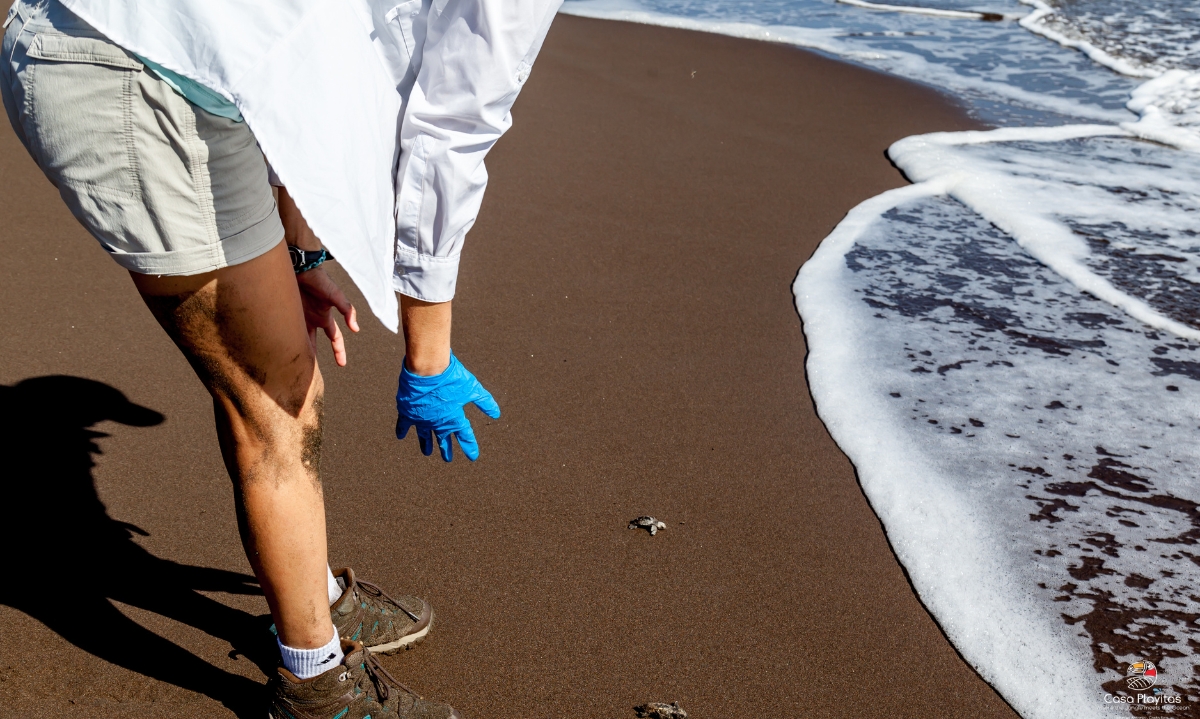
Watching a palm-sized sea turtle hatchling stumble across the sand toward the surf for the very first time, it’s clumsy, urgent, yet completely mesmerizing experience. And, it happens on beaches just a short drive from Casa Playitas. If you’re planning a stay with us and want to build your trip around turtle season, here’s what you need to know about the nesting and release calendar on the Central Pacific coast, and how our concierge team at Casa Playitas makes the experience effortless.
What “Turtle Release Season” Actually Means Here
Sea turtle activity on Costa Rica’s Central Pacific coast, specifically the stretch that runs from Quepos down through Playa Hatillo, Matapalo, and the Isla Damas estuary, follows two overlapping cycles:
- Nesting season, when female turtles come ashore at night to lay their eggs
- Hatching/release season, roughly seven to ten weeks later, when the hatchlings emerge and make their dash to the ocean.
Because eggs are typically relocated to protected hatcheries run by local conservation groups, “release” events are the part visitors get to witness up close. A guide walks a group down to the beach at a set time, and everyone watches (quietly, without flash photography) as a nest’s worth of hatchlings is set free at the waterline.
On this part of the coast, nearby Hacienda Barú and the Matapalo beaches see olive ridley nesting concentrated from mid-July through mid-October, which lines up with the rainy-season window locals consider peak turtle activity for this stretch of coastline. Smaller community run projects around Quepos and Isla Damas run releases through the same general season, though exact dates shift year to year with the tides and the turtles themselves.
That’s the honest caveat with turtle tourism anywhere in Costa Rica: nesting and hatching are wild, weather-driven events, not a fixed showtime. The conservation groups that run these programs typically only confirm a release the same day or the night before, once they know a nest is ready.
Why That Makes a Concierge So Useful
This is exactly the kind of activity that’s hard to plan from your phone before you land, and genuinely frustrating to chase down once you’re already exhausted from travel. A same day tour needs a local contact who:
- Has an existing relationship with the hatchery or conservation project (Isla Damas area programs and Hacienda Barú’s turtle nursery are two of the most established near Quepos)
- Knows which nights currently have viable nests, since not every night has a release
- Can arrange transportation quickly, since these excursions often get confirmed with little notice
- Understands the etiquette, no flash photography, quiet voices, no handling hatchlings unless the guide invites it so, guests don’t accidentally stress the animals
That’s precisely the gap our on site concierge fills.
Your concierge will check in with local conservation contacts near Quepos and Playa Hatillo
How the Casa Playitas Concierge Sets It Up
Guests staying with us at Casa Playitas have a personal concierge available before arrival and throughout the stay, the same person who arranges private chefs, adventure tours, and airport transfers. Turtle releases work the same way:
- Tell us your travel dates when you book, or once you’re settled in. Your concierge will check in with local conservation contacts near Quepos and Playa Hatillo to see what’s realistic for your window.
- We watch for confirmation. Because releases are nest dependent, your concierge tracks updates from the hatchery and lets you know as soon as a night is set, sometimes that’s a few days out, sometimes it’s the same afternoon.
- We handle the logistics. Transportation to and from the release site, timing around sunset or the tide, and a guide briefing on the do’s and don’ts are all arranged for you.
- You just show up and watch. No permits to sort out, no guessing which beach is legitimate, a real concern in this area, since not every advertised “release” is run by an actual conservation program.
If a release genuinely isn’t happening during your stay, your concierge can point you toward related wildlife experiences nearby including mangrove tours through the Isla Damas estuary, night walks in Manuel Antonio National Park, or snorkeling trips where sea turtles are regularly spotted swimming rather than nesting.
Planning Your Stay Around It
If turtle season is the centerpiece of your trip, the safest approach is to build in a few nights of flexibility rather than a single fixed date, nature doesn’t work on a checkout schedule. Aiming for a stay during the rainy-season stretch from July into October gives you the best statistical odds on this coast, but ask your concierge for the most current read when you’re locking in dates, since local conditions shift from one year to the next.
Ready to plan a stay around it? Reach out to your Casa Playitas concierge and we’ll start watching the nests for you.
Related Posts




Welcome to Casa Playitas, your ultimate luxury vacation house rental in Manuel Antonio, Costa Rica with concierge.